

SME July 2026: Higher wage costs another blow for SMEs
Author: James Organ | Posted On: 10 Aug 2026
How are rising wage costs and weakening confidence affecting Australian SMEs in July?
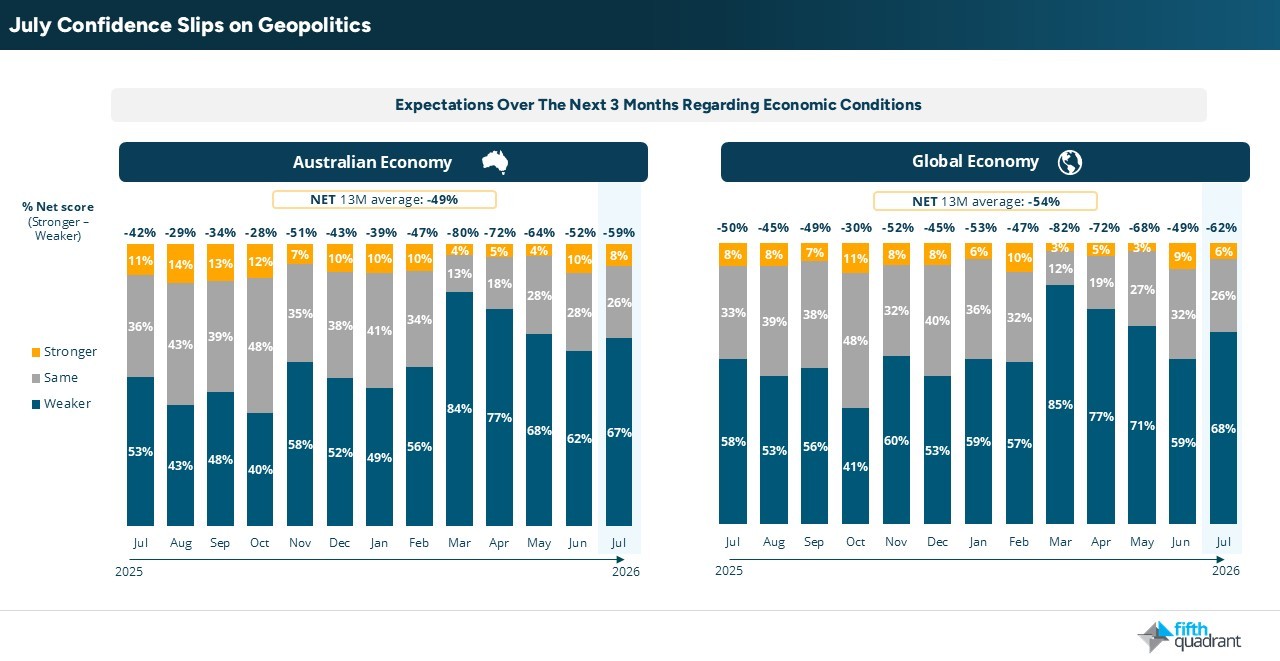
SME July 2026: SME confidence weakened again in July as renewed geopolitical tensions and ongoing cost pressures weighed on business sentiment. Expectations for both the Australian and global economies again deteriorated, while growth ambitions remained subdued, with only 24% planning to expand over the next 12 months.
SME trading remains tough, despite signs of resilience
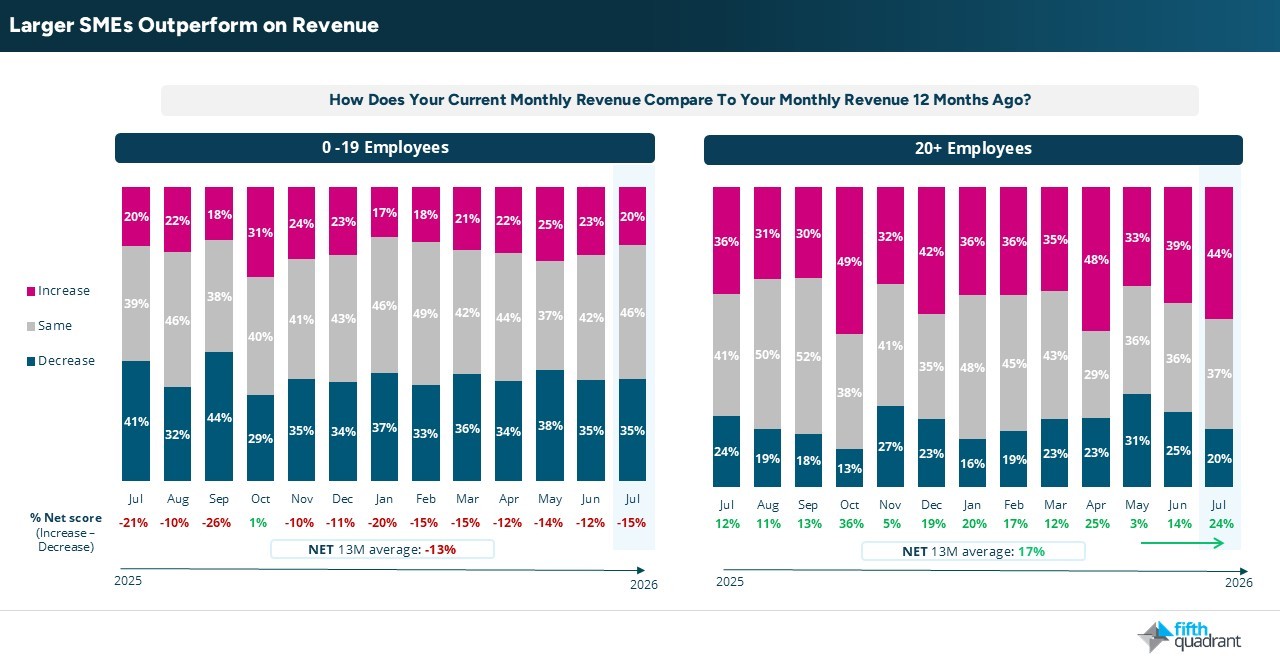
Trading conditions remain challenging despite some signs of resilience. Revenue performance and short-term revenue expectations remain negative, although profitability improved and recruitment activity rebounded. Larger SMEs continue to outperform smaller businesses on revenue, but their growth ambitions weakened noticeably during the month.
Award wage rise intensifies SME cost pressures
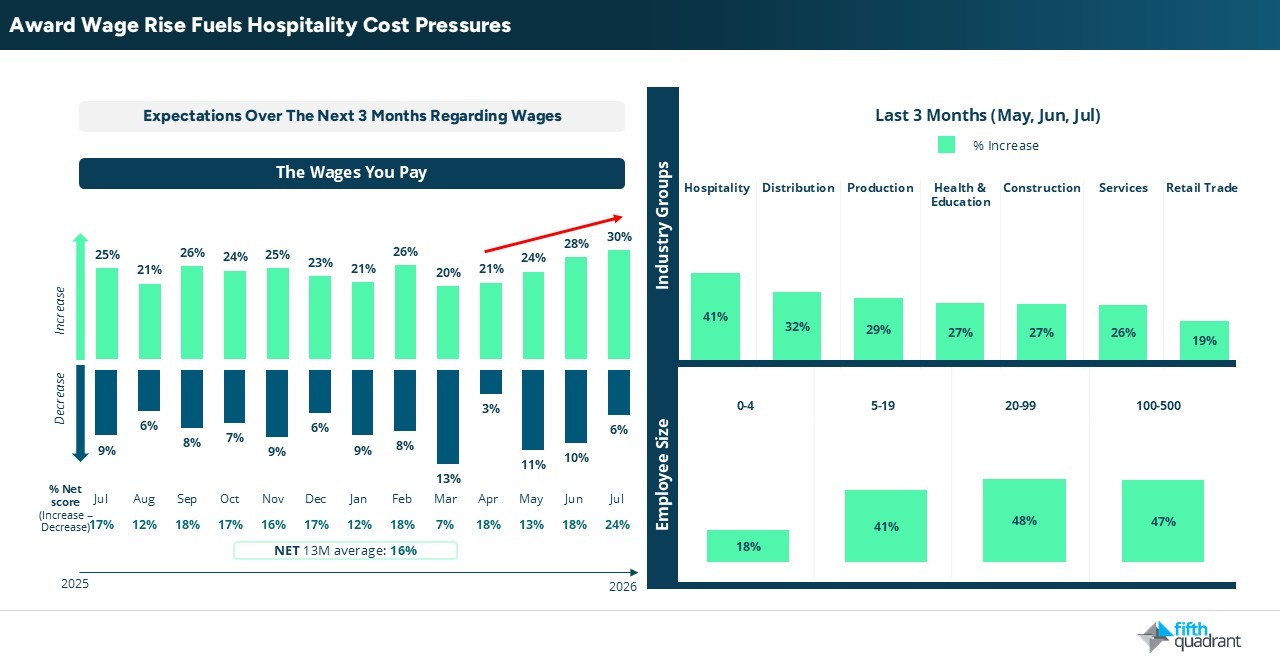
Labour market pressures intensified following the 1 July increase in award wages. Wage expectations rose to their highest level in the past 13 months, adding to cost pressures at a time when revenue and growth expectations remain weak. Hospitality appears particularly exposed given its reliance on casual and award-based employees, while recruitment activity and hiring difficulty both increased.
Conclusion
Businesses remain financially cautious. Capital investment intentions weakened, demand for additional finance eased, and cashflow continues to be the primary reason for borrowing. While loan stress eased from June’s increase, SMEs continue to prioritise cashflow management over expansion.
Please click the link below to access the full report including subgroup analysis by industry sector, size of business and state. Fifth Quadrant and Ovation Research publish monthly updates of this SME market research here. For any questions or inquiries, feel free to contact us here.

These findings are based on the Fifth Quadrant SME Tracker, a monthly study of Australian small and medium-sized businesses launched in April 2020. Each wave includes a minimum of 400 business owners and financial decision-makers from SMEs with up to 500 employees, with results weighted by industry, state and business size to reflect the national SME population.
Posted in B2B, Consumer & Retail, Financial Services