

SME June 2026: Growth aspirations plummet as SME loan stress builds
Author: James Organ | Posted On: 08 Jul 2026
Why are Australian small businesses becoming less focused on growth despite improving economic confidence?
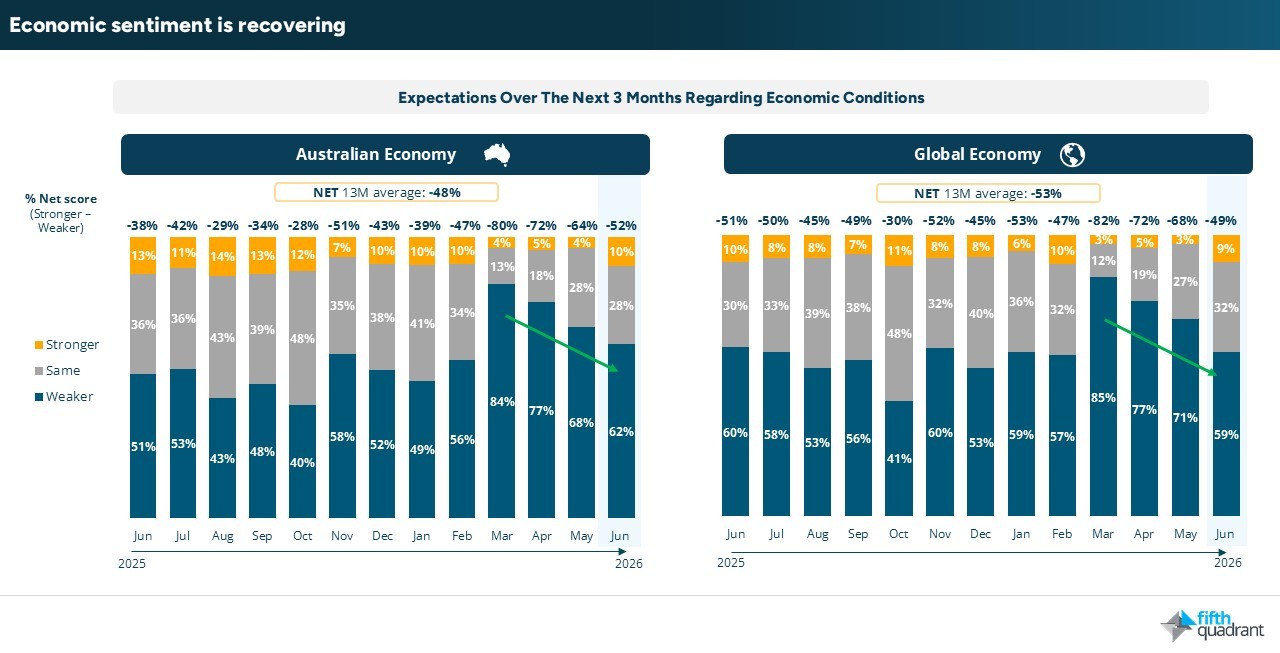
SME June 2026: SME sentiment toward both the Australian and global economy recovered in June, suggesting businesses are becoming slightly less pessimistic about the broader outlook.
However, this improvement has not translated into stronger business ambition. Only 25% of SMEs are now focused on growth, while 21% expect to exit or downsize, leaving net growth intent at just 4%, the lowest result recorded over the past 12 months and well below the 18% average.
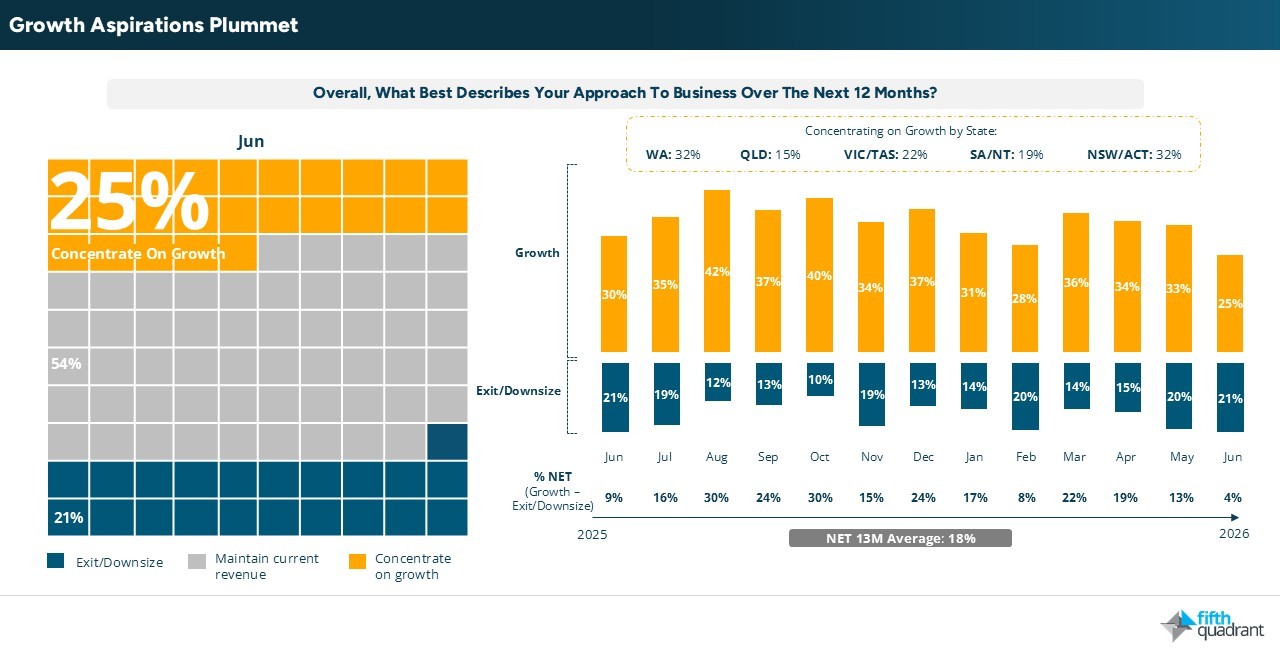
This is concerning at the start of a new financial year, when SMEs would typically be resetting plans and looking for growth opportunities. Instead, many appear to be entering FY27 defensively, prioritising stability, margin protection and cashflow over expansion.
Labour Demand Stays Weak as Hiring Pressure Eases
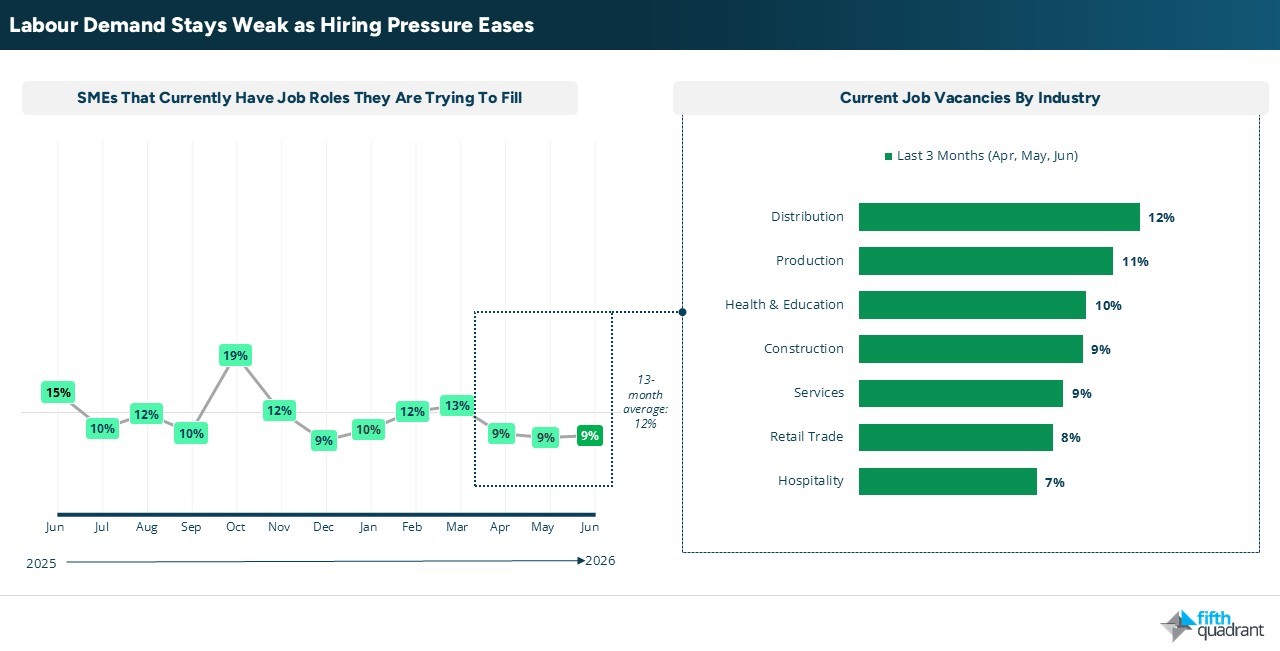
Hiring data reinforces this caution. Only 9% of SMEs have current vacancies for the third month running, which is historically weak and well below the 13-month average of 12%. However, there is some relief in hiring difficulty, which eased in June after May’s spike, suggesting softer labour demand may be reducing pressure in the recruitment market.
Wage and Loan Pressures Build
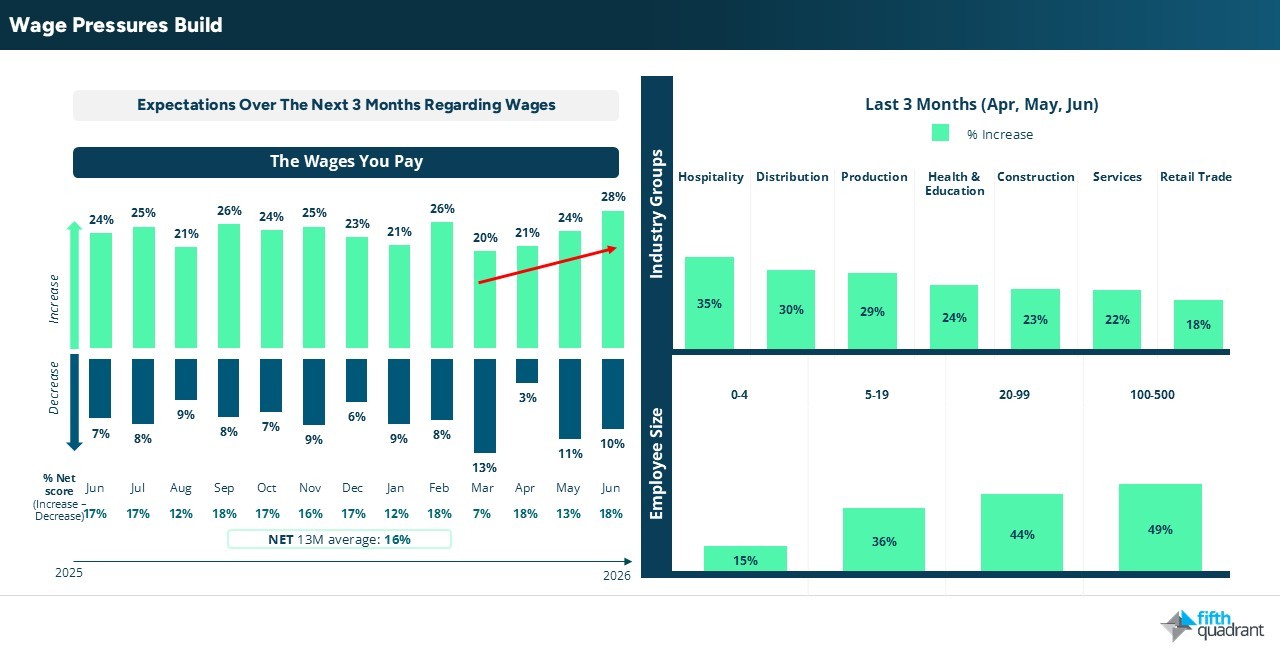
Financial pressure is also building. Loan stress rose to 10% in June after easing in May, while wage growth expectations jumped to a net score of +18%, the joint highest result in the past 13 months. This suggests SMEs are facing rising labour costs even as hiring demand remains subdued, adding pressure to margins and debt servicing capacity.
Conclusion
Overall, June points to a widening gap between improving macro sentiment and weakening business confidence. SMEs may feel slightly less negative about the broader economy, but their own plans remain defensive, with growth intent at a 12-month low, hiring appetite historically weak, wage pressure rising and loan stress increasing. At the start of a new financial year, this suggests many SMEs are still feeling vulnerable in a fragile economic environment.
Please click the link below to access the full report including subgroup analysis by industry sector, size of business and state. Fifth Quadrant and Ovation Research publish monthly updates of this SME market research here. For any questions or inquiries, feel free to contact us here.

SMEs remain resilient
These findings are based on the Fifth Quadrant SME Tracker, a monthly study of Australian small and medium-sized businesses launched in April 2020. Each wave includes a minimum of 400 business owners and financial decision-makers from SMEs with up to 500 employees, with results weighted by industry, state and business size to reflect the national SME population.
Posted in B2B, Consumer & Retail, Financial Services