

SME October 2026: SMEs protect profits as revenue and confidence falter
Author: James Organ | Posted On: 10 Nov 2026
How are Australian SMEs performing as economic confidence weakens? SME October 2026 figures reveal a growing divide between profitability and business confidence. While revenue has declined and businesses are pulling back on hiring and investment, many Australian SMEs continue to protect their profit margins through tighter cost control.
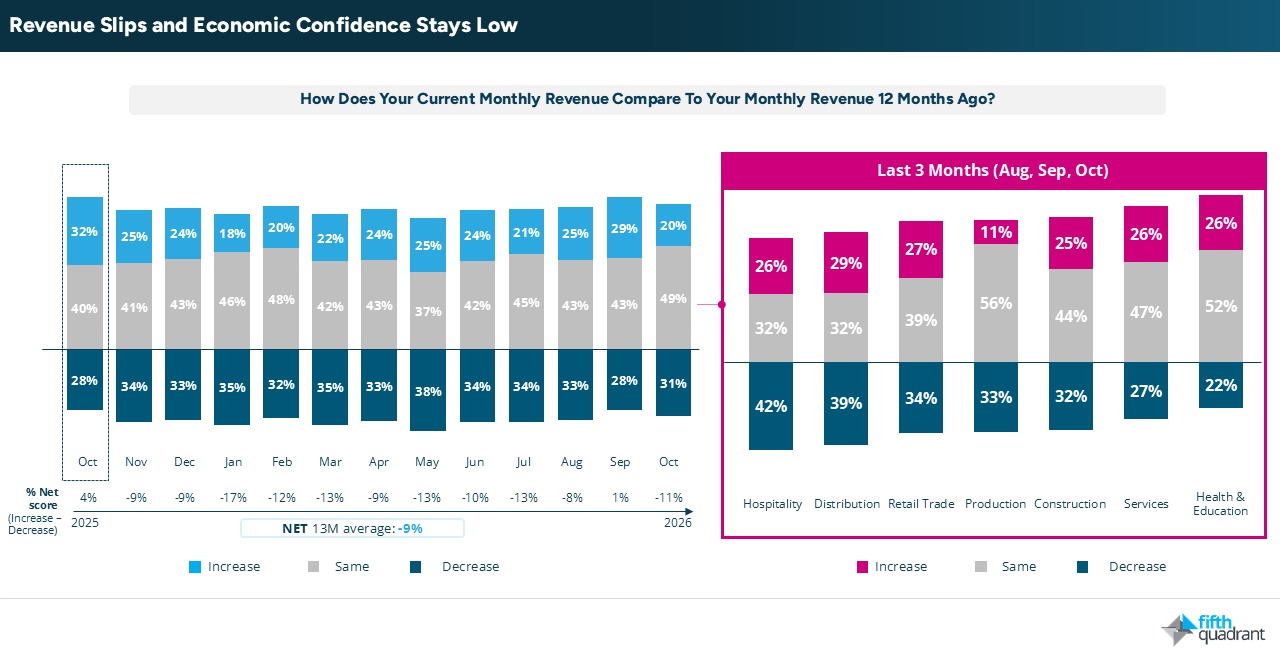
Revenue weakened in October, with the net score falling from +1% in September to -11%, while short-term expectations returned to negative territory (-5%). Confidence in the Australian economy remains deeply negative at -57%, with global sentiment weaker still at -62%.
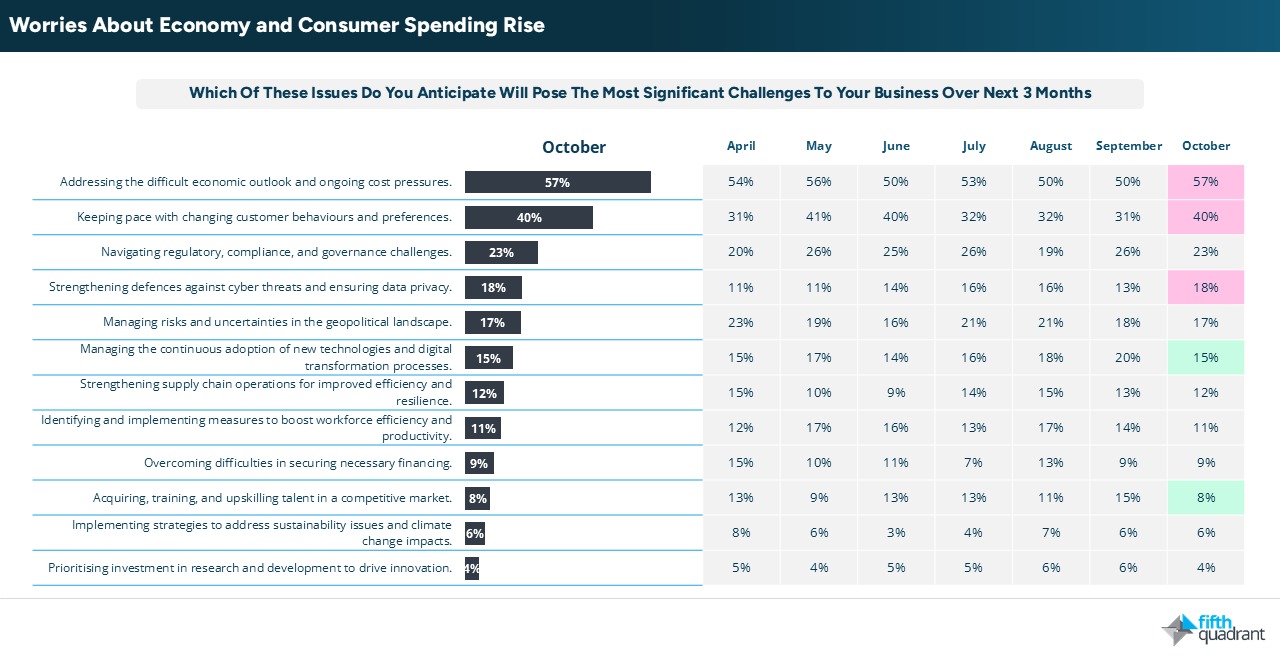
Worries about economy and consumer spending rise
Interest rate and cost-of-living pressures continue to weigh on confidence and consumer spending, with concerns about the economic outlook (57%, up from 50%) and changing consumer behaviour (40%, up from 31%) increasing.
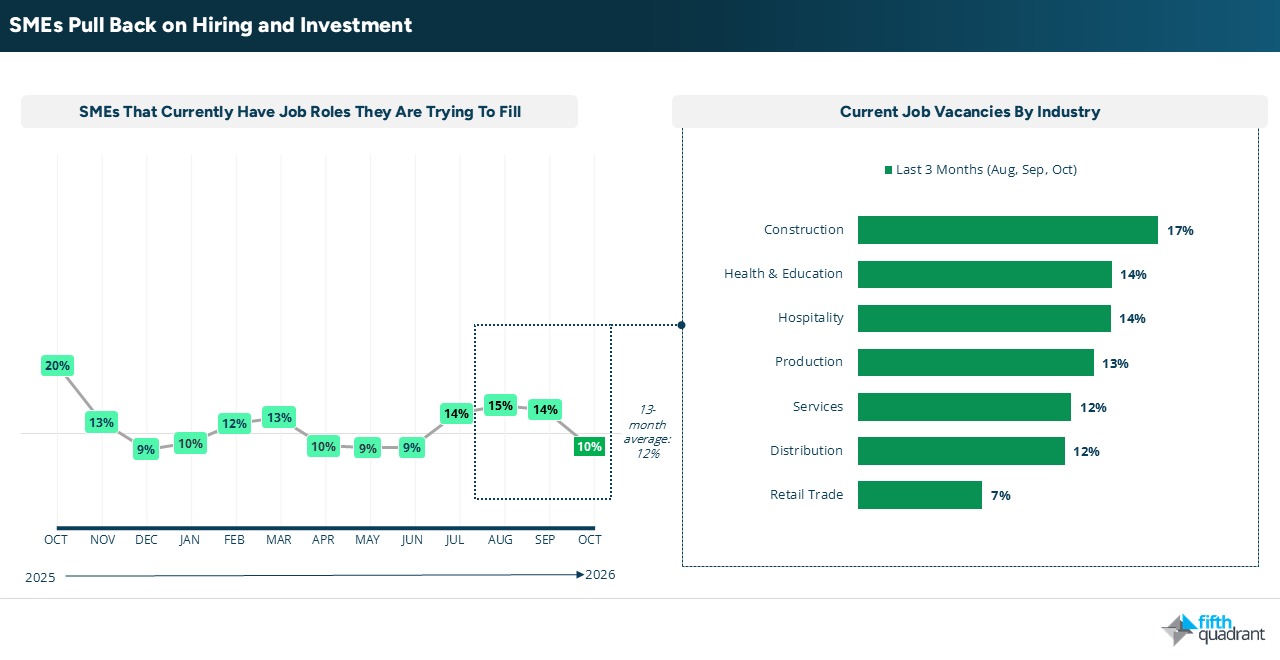
SMEs pull back on hiring and investment
In response, SMEs are scaling back recruitment and investment, with job vacancies falling from 14% to 10% and capital expenditure intentions declining across almost all categories following September’s spike.
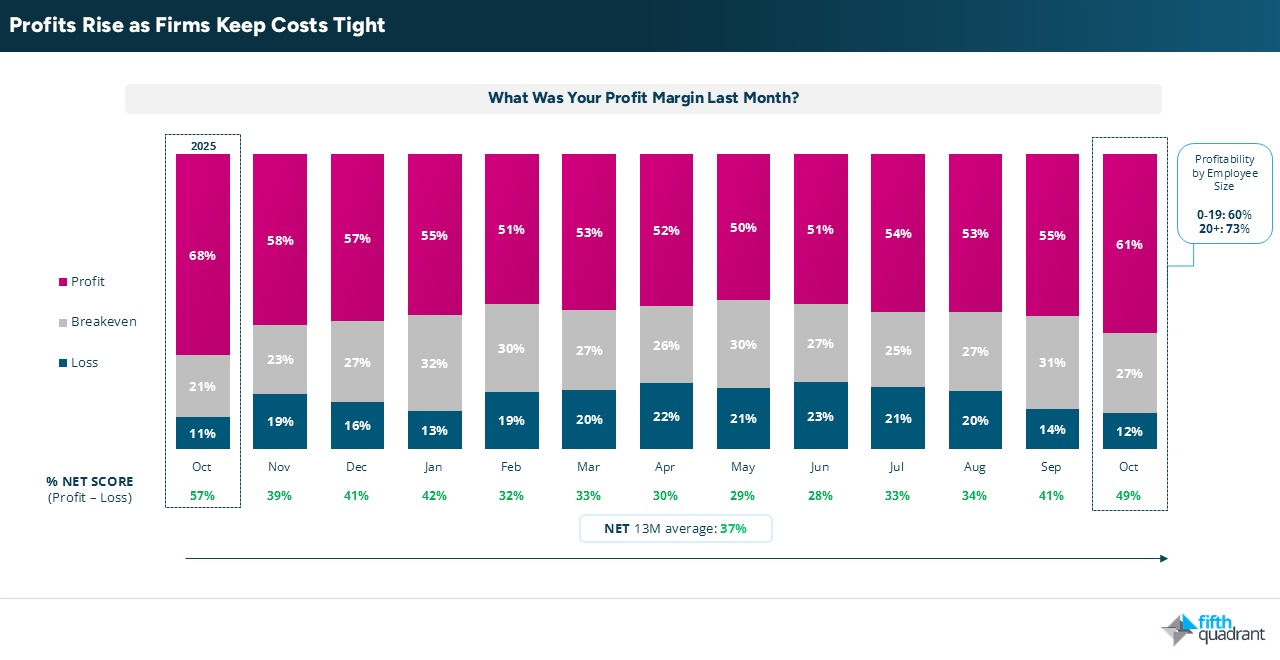
Profits rise as firms keep costs tight
Despite these pressures, profitability remains resilient, with the net score rising to +49%, well above the 13-month average of +37%. Businesses continue to protect margins through cost control and operational efficiencies despite weaker revenue.
Growth plans hold as loan stress stays contained
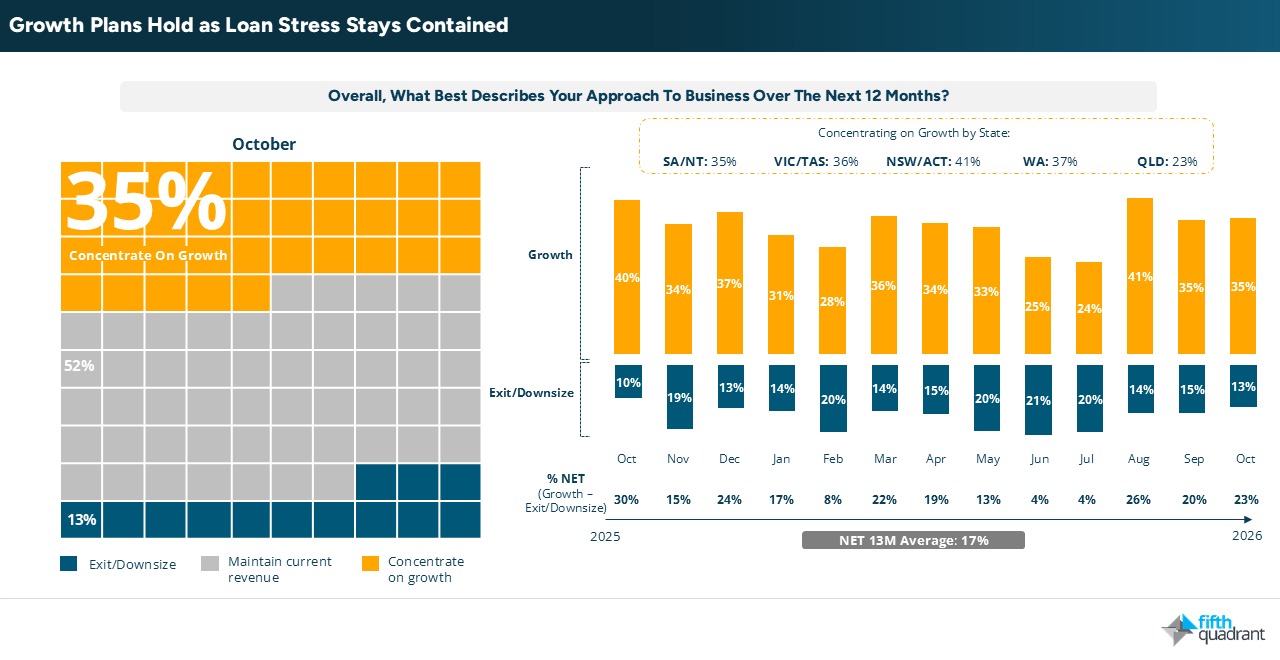
Growth ambitions remain positive, with 35% of SMEs focused on expansion. Intentions have strengthened among larger SMEs, while smaller businesses remain above their historical average. Loan stress is contained, with just 8% anticipating repayment difficulties, broadly unchanged from a year ago.
Conclusion
In summary, SMEs remain financially resilient but increasingly cautious. While profitability is holding up, weak economic confidence is creating a widening gap between businesses’ ambitions for growth and their willingness to invest.
Please click the link below to access the full report including subgroup analysis by industry sector, size of business and state. Fifth Quadrant and Ovation Research publish monthly updates of this SME market research here. For any questions or inquiries, feel free to contact us here.

These findings are based on the Fifth Quadrant SME Tracker, a monthly study of Australian small and medium-sized businesses launched in April 2020. Each wave includes a minimum of 400 business owners and financial decision-makers from SMEs with up to 500 employees, with results weighted by industry, state and business size to reflect the national SME population.
Posted in B2B, Consumer & Retail, Financial Services