

Australians brace for another tough year
Author: James Organ | Posted On: 07 Jul 2026
Why has Australian consumer confidence in 2026 fallen despite easing inflation?
Australians are entering the new financial year with a sharply more negative view of the economy, cost of living and their own household finances.
Confidence is weakening across the economy, cost of living and household finances
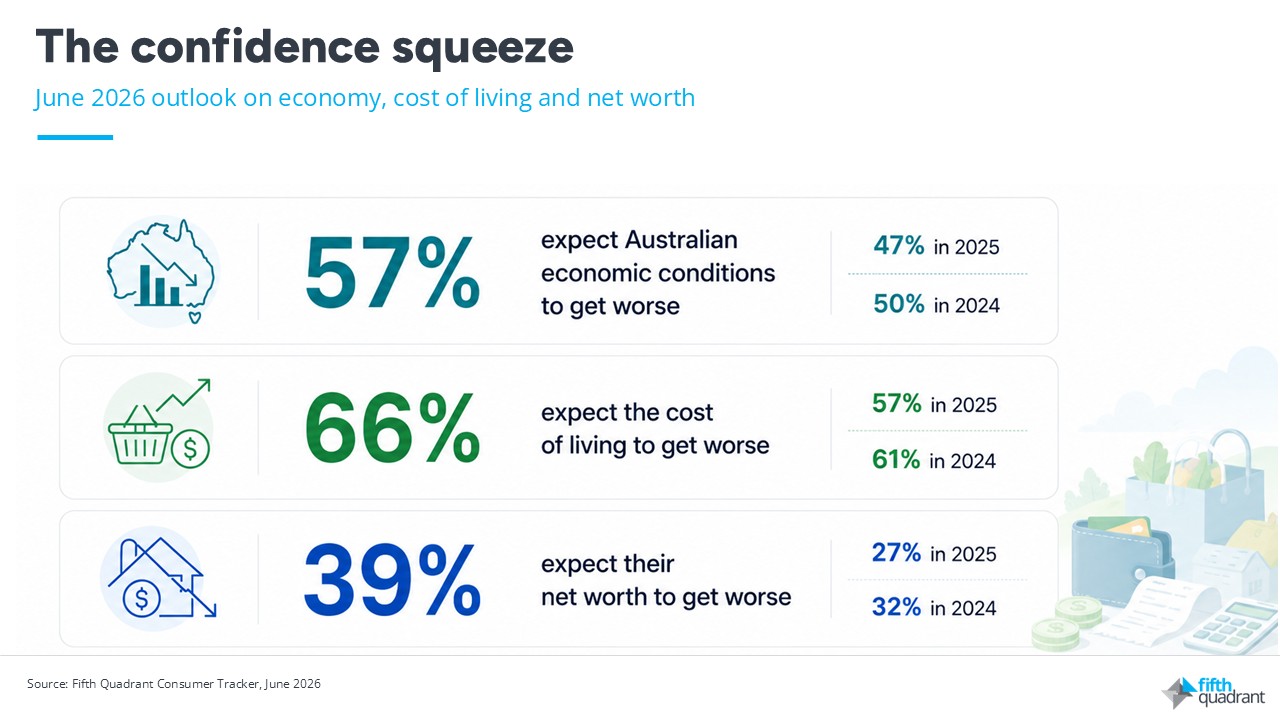
The latest Fifth Quadrant Consumer Tracker shows that economic confidence has fallen, with 57% of Australians now expecting Australian economic conditions to get worse over the next 12 months. This is up from 47% in 2025 and above the 50% recorded in 2024.
Cost of living remains the dominant concern. Two-thirds of Australians now expect the cost of living to get worse over the next year, rising from 57% in 2025 to 66% in June 2026. This confirms many households do not yet feel that inflationary pressure has eased in their day-to-day lives.
The more concerning shift is the decline in personal financial confidence. Almost four in ten Australians now expect their net worth, or overall financial position, to get worse over the next 12 months. This has increased sharply from 27% in 2025 to 39% in June 2026, and is also higher than the 32% recorded in 2024.
The squeeze is spreading across age and income groups
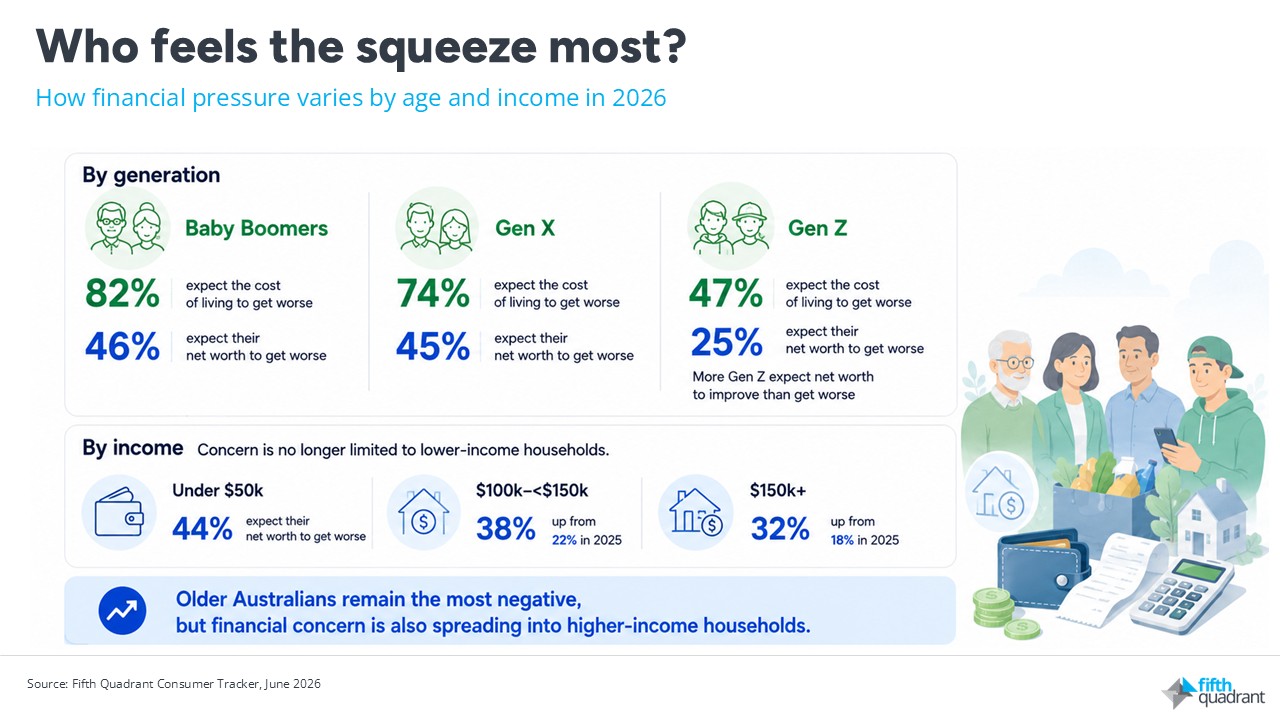
The pressure is not evenly distributed. Older Australians are the most negative across the three measures, with 82% of Baby Boomers expecting the cost of living to get worse and 46% expecting their net worth to deteriorate. Gen X is also under pressure, particularly on cost of living and personal financial outlook. By contrast, Gen Z remains less pessimistic, with only 25% expecting their net worth to get worse and more expecting it to improve.
There are also signs that financial concern is spreading beyond lower-income households. While those earning under $50,000 remain highly exposed, higher-income groups have also recorded sharper increases in expectations that their net worth will decline. This suggests the squeeze is not only being felt through everyday prices, but also through broader concerns about wealth, savings and financial resilience. Together, these results point to a broader confidence squeeze. Australians are not only concerned about the cost of everyday essentials, they are also becoming more cautious about the wider economy and their own financial resilience.
What weaker consumer confidence means for businesses
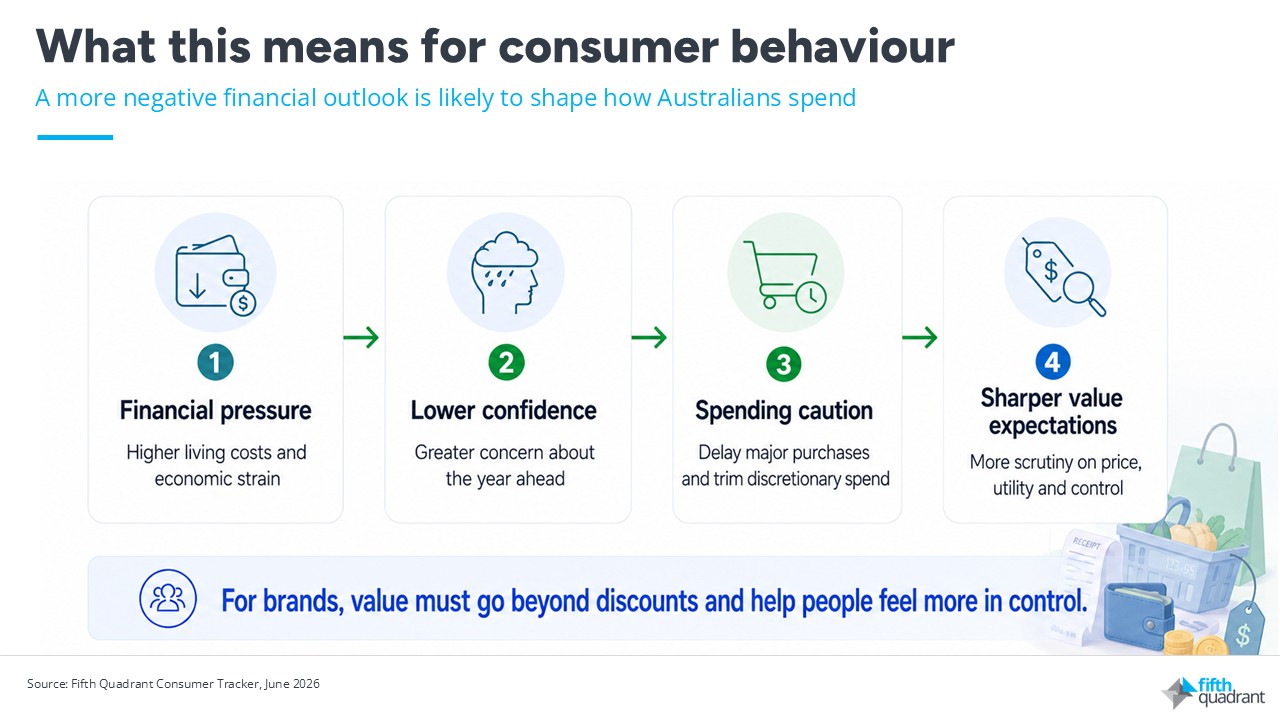
This matters because household expectations influence behaviour. When people feel less confident about the economy and their own financial position, they are more likely to delay major purchases, reduce discretionary spending and become more cautious about debt. For businesses, this creates a more challenging environment, particularly in categories that rely on consumer confidence, upgrade cycles or non-essential spending. Consumers are likely to remain highly selective, looking for products and services that help them manage costs, reduce risk and feel more in control.
This does not mean consumers will stop spending altogether. Rather, they are likely to become more deliberate in how they spend, weighing up necessity, timing and perceived value more carefully. Brands that can reduce friction, provide certainty and demonstrate clear value are likely to be better placed than those relying only on broad promotional messaging.The data also suggests that value will remain central, but consumers are likely to define value more carefully. Discounts and price promotions may help, but they will not be enough on their own. Brands need to demonstrate practical value by helping customers make better decisions, avoid unnecessary costs and feel more confident about their financial choices.
As Australians look ahead to the next 12 months, the mood is cautious. Economic confidence has weakened, cost of living concerns have intensified and personal financial outlook has deteriorated. For businesses, understanding this shift will be critical to staying relevant in a market where consumers are watching every dollar more closely. To understand how changing consumer confidence could affect your category, brand or customer strategy, contact us today.
Sources: Fifth Quadrant Consumer Tracker, June 2026 (national survey of Australian consumers); Australian Bureau of Statistics (Consumer Price Index and Household Spending indicators); Reserve Bank of Australia (Monetary Policy Statements and economic forecasts); Australian Treasury (Budget 2026–27 economic outlook). These sources provide broader context on consumer confidence, household finances, inflation, cost of living and the Australian economic environment discussed in this article.
Posted in Consumer & Retail, B2B, CJM, Social & Government, Uncategorized