

Car Brand Loyalty At A Tipping Point
Author: James Organ | Posted On: 16 Sep 2026
Why is car brand loyalty in Australia weakening in 2026?
Automotive brand loyalty is under pressure, and the latest Fifth Quadrant Consumer Tracker shows repeat purchase can no longer be taken for granted.
In 2026, just over half of Australians say they would buy the same brand of car they currently own if they were buying today. This has fallen from 60% in 2025 to 51% in 2026, pointing to a more fluid and competitive loyalty environment.
Why car brand loyalty in Australia is weakening
The shift is also evident in the broader new-car market. VFACTS data confirms Australian buyers are increasingly open to alternatives to the traditional favourites. Chinese-manufactured vehicles accounted for approximately 20% of Australian new-vehicle sales in 2025, up from around 14% in 2024. By April 2026, Chinese-manufactured vehicles accounted for approximately 30% of monthly sales, while BYD ranked second overall for the month with 7,702 sales and 8.3% market share.
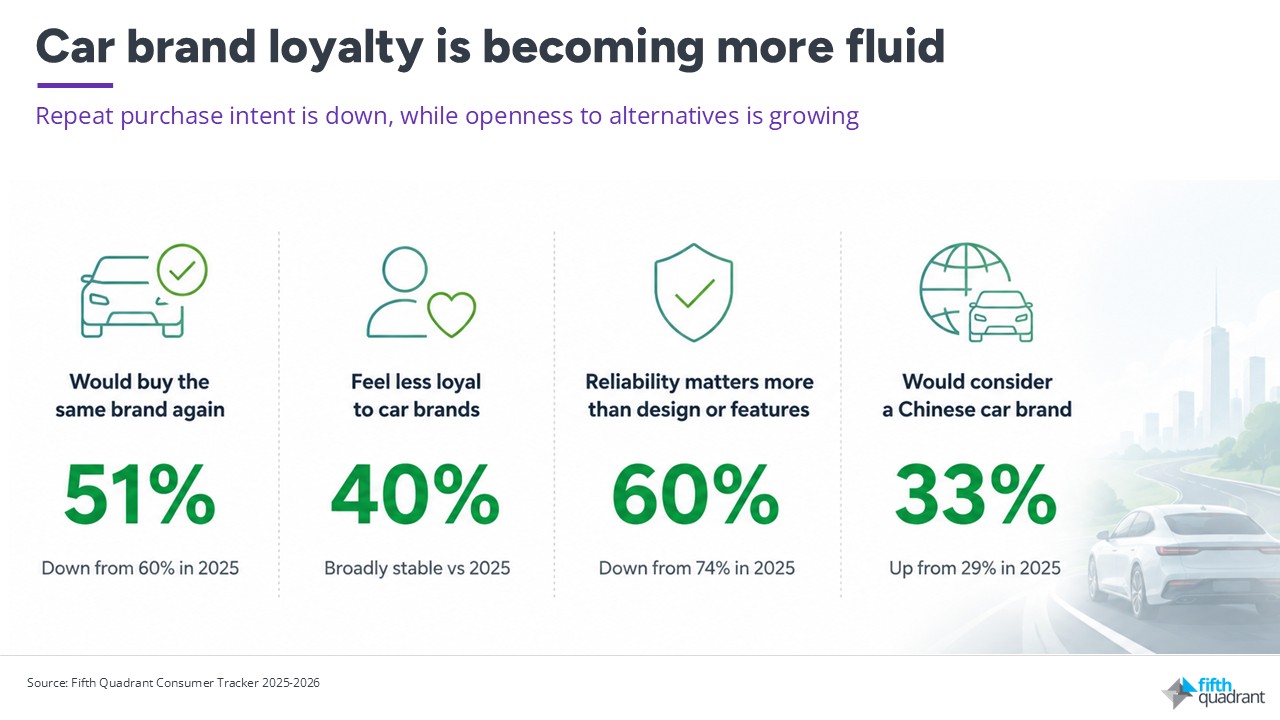
Traditional favourites still matter, but buyers are no longer defaulting to previous ownership in the same way. New entrants, Chinese brands, EV brands and value-led challengers are expanding the consideration set and giving consumers more reasons to compare before committing.
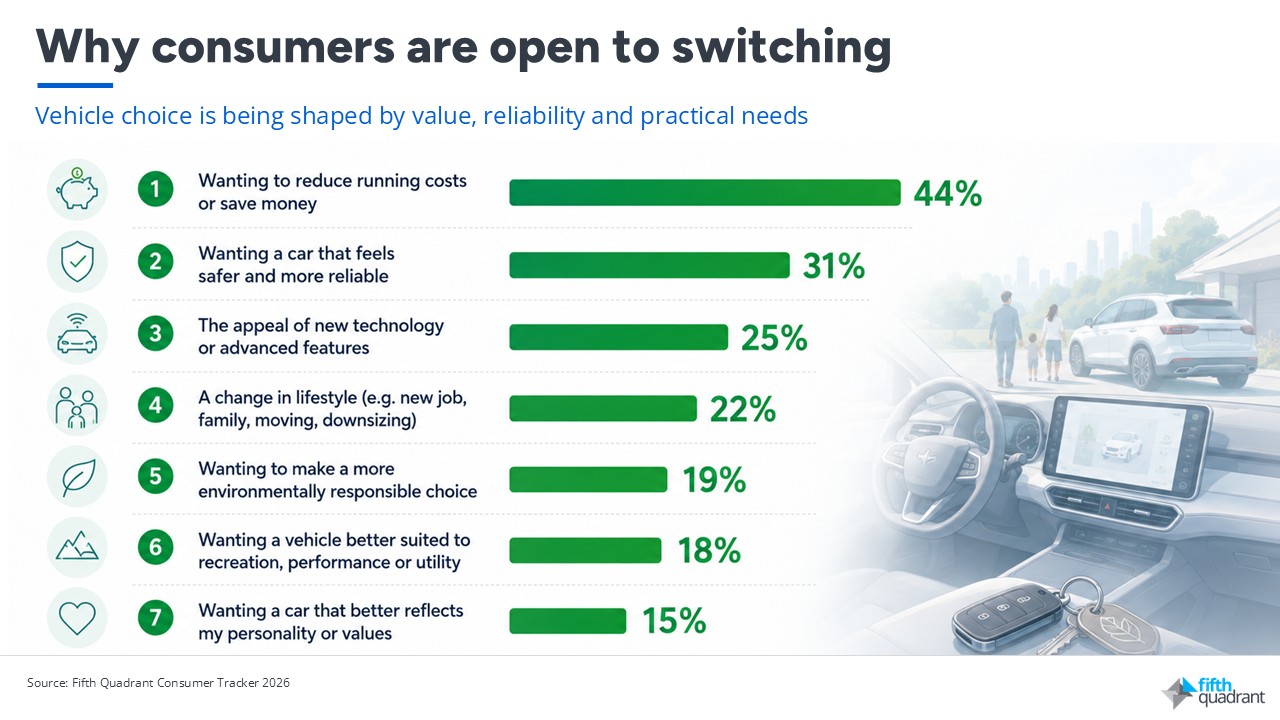
The drivers of vehicle choice show why loyalty is becoming more conditional. The leading trigger is wanting to reduce running costs or save money, cited by 44% of Australians, followed by wanting a safer and more reliable car at 31%. New technology or advanced features is also a factor at 25%, but the broader pattern is clear. Consumers are looking for practical reasons to stay or switch.
Loyalty pressure varies by generation and income
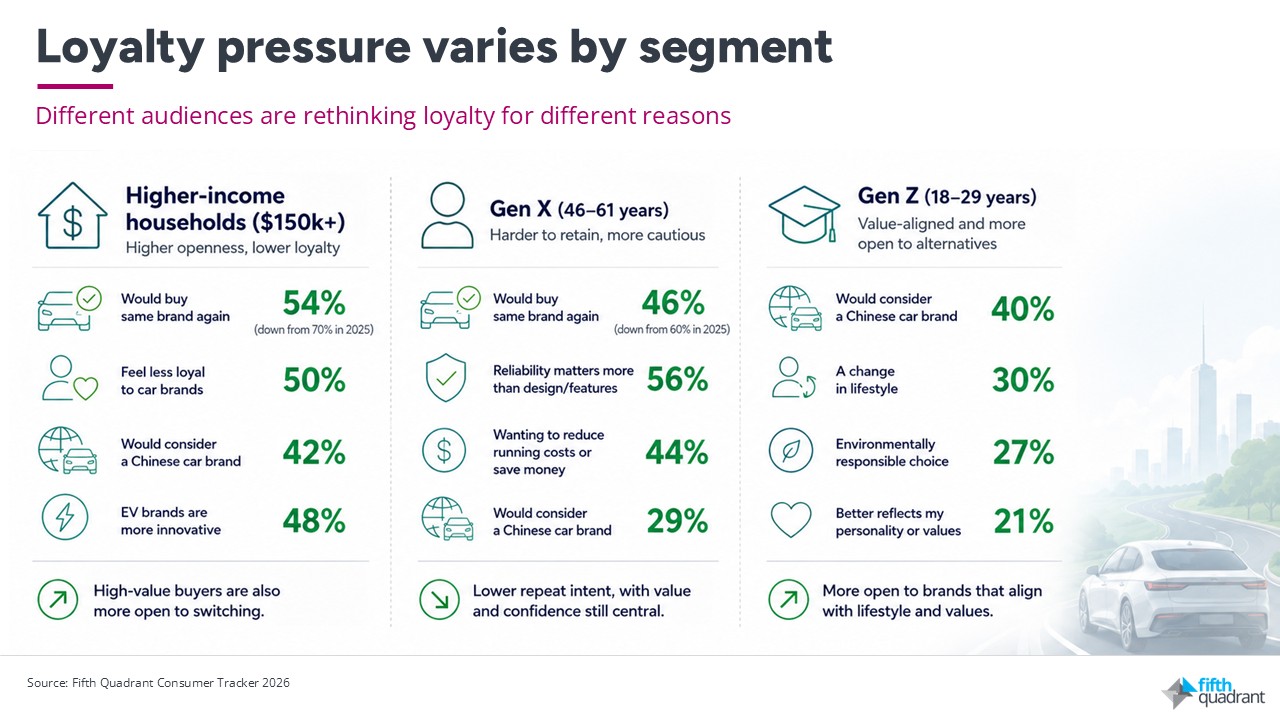
The motivations also differ by segment. Baby Boomers are more likely to be driven by running cost savings, at 55%, while Gen Z is more likely than average to cite lifestyle change, environmental responsibility and wanting a car that reflects their personality or values. Older buyers are more responsive to cost and reliability, while younger buyers are more open to brands that align with lifestyle, values and identity.
The demographic cuts show where loyalty risk is most commercially significant. Among households earning $150k+, only 54% say they would buy the same brand again, down from 70% in 2025. Half also say they feel less loyal to car brands than they used to. This group is more open to challenger propositions, with 42% willing to consider a Chinese car brand and 48% agreeing EV brands are more innovative than traditional carmakers.
Gen X also stands out as a harder-to-retain segment, with only 46% saying they would buy the same brand again. However, their lower repeat intent is not matched by strong enthusiasm for new technology, suggesting brands may need to win them back through value, reliability and ownership confidence rather than novelty.
How dealers and OEMs can re-earn loyalty
The more interesting shift is that traditional loyalty anchors are also being reassessed. A car brand’s reputation for reliability remains important, with 60% agreeing that reliability matters more than design or features. However, this has fallen sharply from 74% in 2025. Reliability still matters, but it may no longer be enough on its own to secure repeat purchase.
This points to a more demanding consumer mindset. Buyers are weighing reliability alongside value for money, warranty coverage, servicing experience, technology confidence, ownership costs and brand trust.
For dealers and OEMs, the implication is clear. Loyalty needs to be actively re-earned across the whole customer journey. The sales experience matters, but so does what happens after delivery. Service transparency, proactive communication, digital convenience, warranty confidence and ongoing ownership support are increasingly important in sustaining brand preference.
The loyalty opportunity is not simply to make customers “love” the brand. It is to make the brand feel easier, safer and more worthwhile to choose again.
As automotive brand loyalty becomes more fluid, understanding what is driving customer choice is increasingly important. Fifth Quadrant’s automotive market research helps brands, OEMs and dealers uncover changing consumer expectations, identify emerging loyalty risks and understand the factors influencing purchase decisions. Contact us to learn how our automotive research can help you stay closer to the market and make more confident customer and brand decisions.
Sources: Fifth Quadrant Consumer Tracker (2026), referenced publicly in Fifth Quadrant, Australian Fuel Prices Are Changing Driving Habits; VFACTS market data reported by carsales for Business, Chinese-manufactured vehicles a key driver of 2025 Australian new-car sales; and carsales for Business, VFACTS April 2026: EVs hit one in six as Chinese brands reshape the market.
Posted in Auto & Mobility, B2B, Consumer & Retail, Uncategorized