
Decarbonisation investment in Australia is shifting toward proven technology
Author: James Organ | Posted On: 16 Nov 2026
Where is decarbonisation investment in Australia going, and what does the shift toward proven technology mean for businesses planning their energy transition?
Australia’s clean energy build is still growing, but the way capital is being spent is changing. New money is flowing to batteries and other proven, lower-cost technology, while large wind and solar projects and harder industrial projects are moving more slowly.
Recent coverage has focused on two signals. One is a slowdown in new commitments to large wind and solar projects, alongside record investment in batteries. The other is the federal government’s $5 billion Net Zero Fund, which has been in the news for its slow start. Here we look at what the official figures show, and what it means for businesses planning their own transition.
Where the money went in 2025
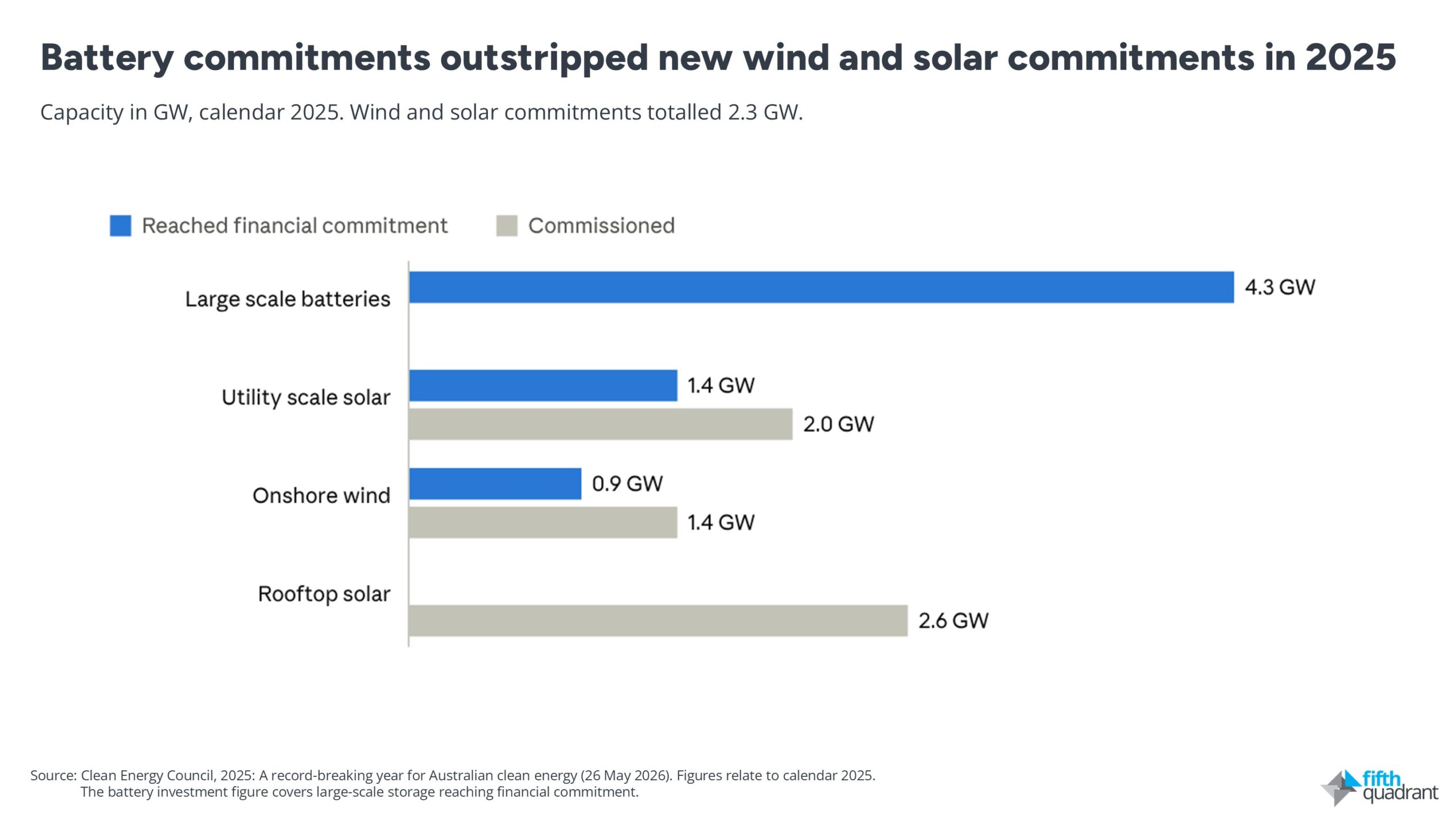
The Clean Energy Council’s Clean Energy Australia 2026 report, released in May 2026, shows a clear split. Only 2.3 GW of new wind and solar generation reached financial commitment in 2025, down 46% on the year before. The council described this as a decade low. Onshore wind commitments fell 59% and utility-scale solar fell 29%.
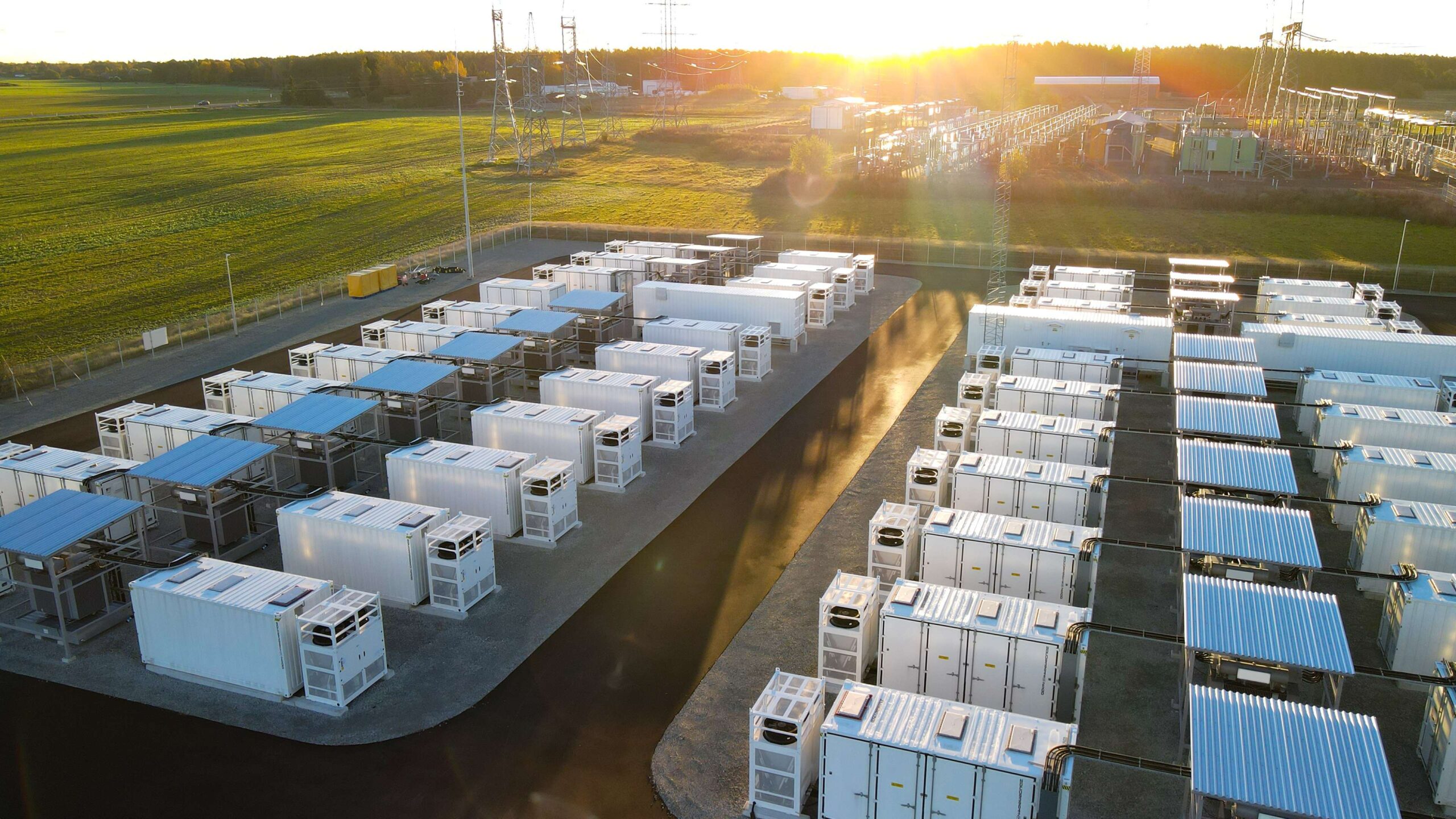
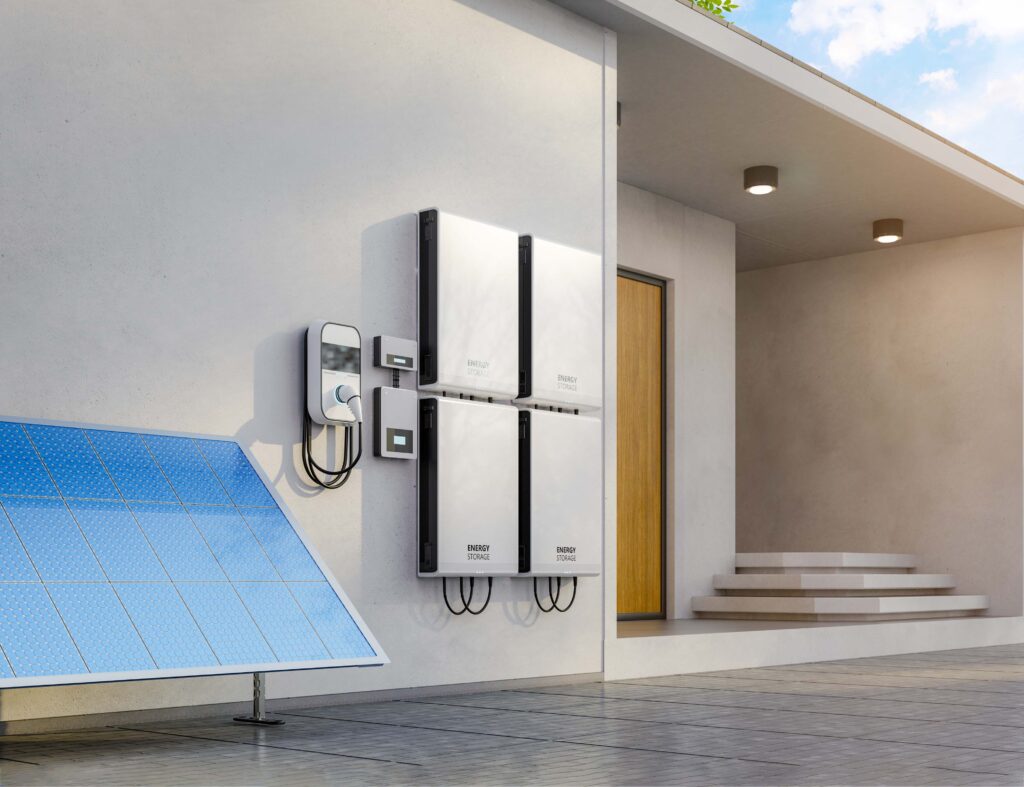
Batteries went the other way. A record 4.3 GW of large-scale battery storage, worth $4.8 billion, reached financial commitment, up 10% in value on 2024. Home battery installations rose 260%.
This shift towards battery storage also reflects the changing needs of Australia’s electricity system, as we explored in our earlier article, What 50% renewables means for Australia’s electricity system, where we highlighted the growing importance of storage, flexibility and grid stability as renewable generation increases.
This is not a sign the transition has stalled. Projects committed in earlier years are now being built, and 5.9 GW of new wind and solar generation capacity was added in 2025, including rooftop solar, up 28.5%. Renewables supplied 42.7% of Australia’s electricity in calendar 2025, up from 39% in 2024. The weak point is the pipeline of new large generation projects, which matters for supply later this decade.
The Net Zero Fund, from announcement to deployment
The $5 billion Net Zero Fund was announced in 2025 as part of the government’s Industry Sector Plan. It is not new money. It sits inside the existing $15 billion National Reconstruction Fund and is run by the National Reconstruction Fund Corporation (NRFC).
The fund’s design was finalised in February 2026 after more than 120 written submissions and an industry forum with over 60 executives. Its target return is the five-year government bond rate minus 1%, well below the bond rate plus 2 to 3% sought from the NRFC’s general portfolio.
That lower hurdle is meant to support first-of-a-kind projects, earlier-stage proposals and projects with large upfront costs and long payback periods. The two priorities are cutting emissions at large, energy-intensive industrial sites, and scaling up local manufacturing of low-emissions technology such as batteries, solar panels, wind turbines and electrolysers.
The government said the fund would be operational by mid-2026, and the NRFC now lists it as open for applications. Its 2025–26 annual report describes the development of an investment pipeline, while its public Net Zero Fund page does not identify completed investments.
That slow start is a warning sign about how long large industrial deals can take to reach financial close, rather than a judgement on the fund itself. The next test will be whether concessional finance translates into committed projects and measurable industrial emissions reductions.
What it means for business
For most businesses the message is practical. Recent investment commitments suggest capital is moving more quickly into technology with established costs and clearer paths to returns. Batteries fit that profile. Large new generation projects and deep industrial change take longer to finance, even when concessional money is on the table.
That has knock-on effects. Energy-intensive firms weighing an upgrade may find support exists but takes time to secure. Suppliers of equipment and services to the energy sector may see demand tilt toward storage and grid work in the near term. And for energy users, the pace of new generation commitments is one of the factors that will shape supply and prices later this decade.
The 2025 figures show a transition that is still moving, but unevenly. For businesses planning decarbonisation investment in Australia, the challenge is to distinguish technologies ready for deployment now from projects that require longer financing and development timelines. Watching where commitments go next, and whether the first Net Zero Fund deals land, will say more than any single period of data.
Fifth Quadrant helps organisations understand how businesses and customers are responding to the energy transition. Talk to us about your research needs.
Sources: Clean Energy Council, 2025: A record-breaking year for Australian clean energy (26 May 2026), Clean Energy Council, Clean Energy Australia 2026 report, National Reconstruction Fund Corporation, Net Zero Fund, National Reconstruction Fund Corporation, 2025–26 Annual Report, Department of Industry, Science and Resources, Net Zero Fund finalises design, Minister for Industry and Innovation, Net Zero Fund’s $5 billion of world-leading decarbonisation finance (4 February 2026), Carbon Pulse, Australian decarbonisation investment falls again (8 October 2026)
Posted in Energy Transition, B2B, Consumer & Retail, Uncategorized