

The hidden reality of male confidence
Author: Nick Rassool | Posted On: 18 Feb 2026
Australian men are sitting at 63 out of 100 when it comes to overall confidence. If your phone battery was at 63%, you’d be looking for a charger. That’s where male confidence stands right now, according to groundbreaking research from Man of Many’s Male Confidence Index, conducted by Fifth Quadrant.
The research surveyed over 2,000 Australian men and women to quantify confidence across five critical life domains: Finance & Career, Health & Wellbeing, Relationships & Belonging, Masculine Identity, and Self-Perception. The results challenge conventional assumptions about how male confidence develops with age.
Gen Z leads, Gen X collapses
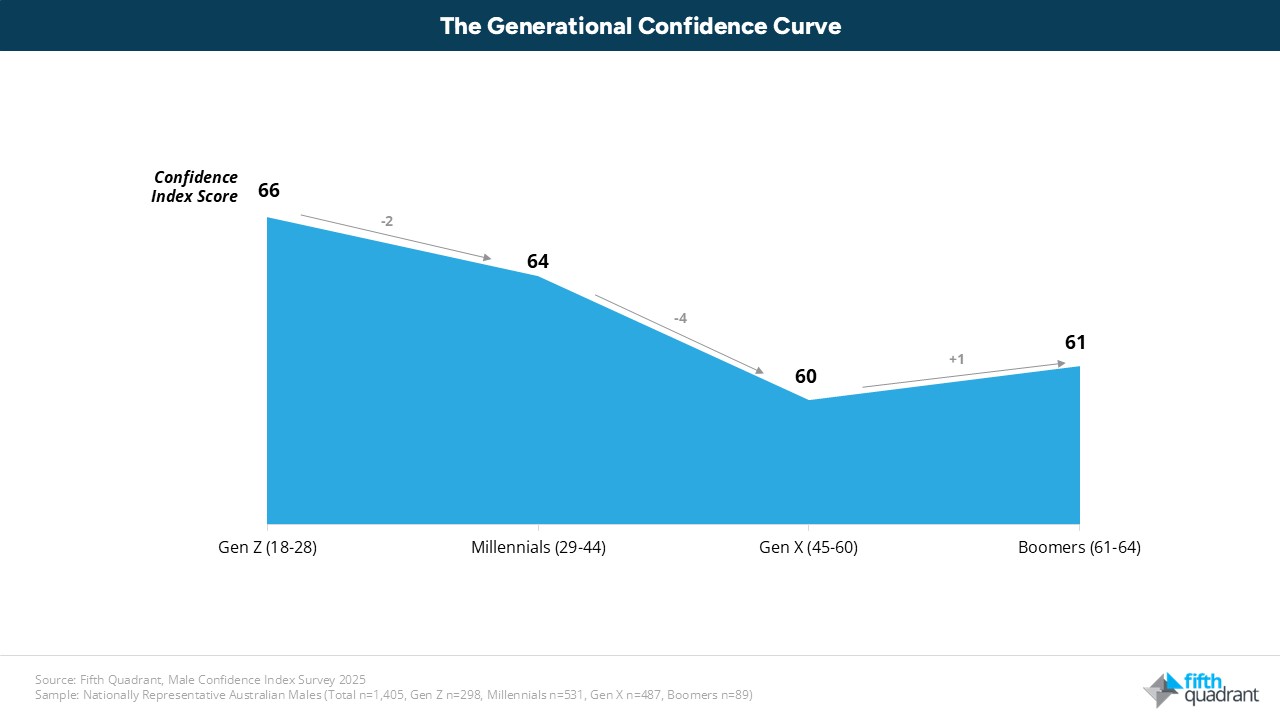
The most striking finding contradicts conventional wisdom: confidence does not increase with age. Gen Z men score highest at 66 out of 100, reporting greater financial optimism, stronger relationships, and more emotional openness than any other generation.
The real crisis sits with Gen X men in their 40s and 50s. Their confidence drops to 60 out of 100, the lowest of any generation. This mid-life confidence cliff has serious implications for wellbeing, workplace performance, and relationships.
Gen X men score lowest on showing vulnerability without judgement, expressing their identity without fear, and speaking openly about men’s issues. This suppression creates a feedback loop where less communication leads to fewer support networks, which further erodes confidence.
The divide has clear roots. Only 30% of Gen X men could express emotions openly with their father during childhood. For Gen Z, that figure doubles to 61%. Gen X fathers are consciously breaking this cycle, providing their sons with the emotional toolkit they never received.
The masculinity disconnect
A striking gap exists between what men think women value and what women actually prioritise. Almost a third of all men (29%) believe strength defines masculinity. Only 18% of women agree Meanwhile, 28% of women identify empathy as core to masculinity, but just 17% of men think that women care about this quality.
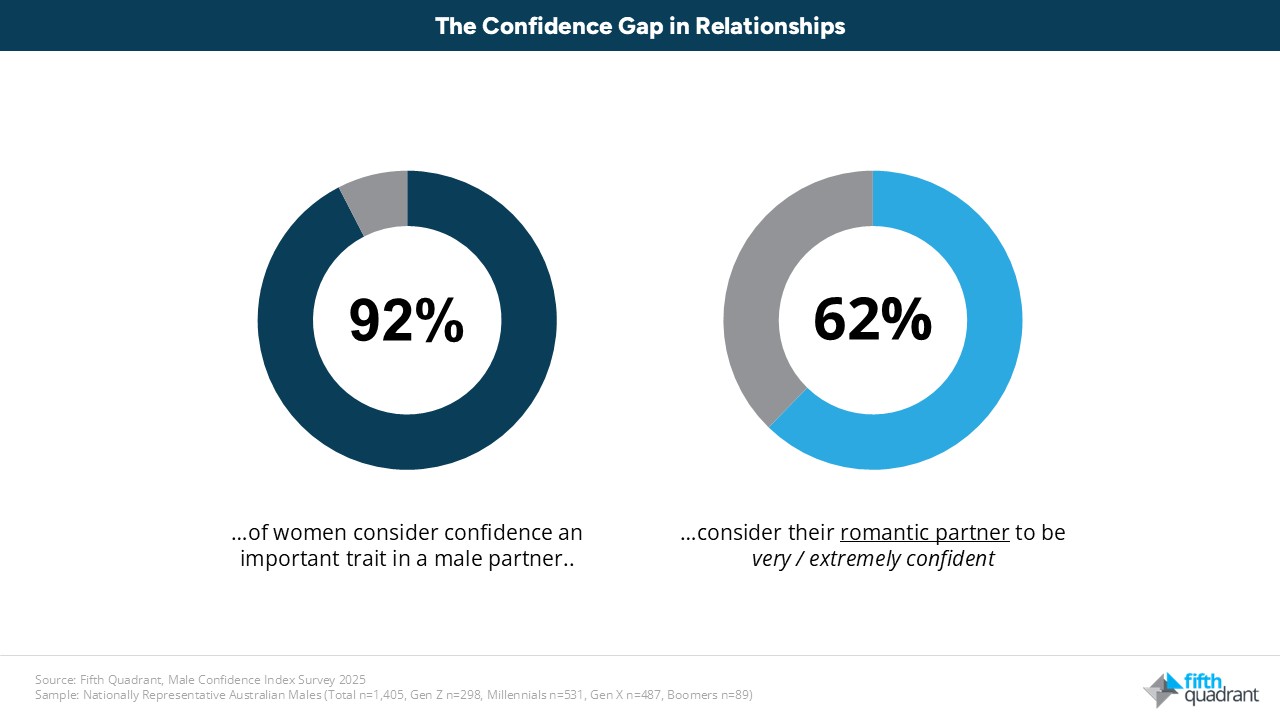
Men chase an outdated masculinity reinforced by social media “alpha male” influencers whilst women seek emotional availability and genuine vulnerability. The consequences are measurable: whilst 92% of women say confidence matters in a partner, only two-thirds believe their partner is actually confident.
Even more telling, 83% of women observe men feeling pressure to appear in control when struggling internally, and 82% believe men struggle with anxiety without showing it openly.
Social media’s fragile promise
Gen Z’s high confidence comes with a caveat. Almost 40% spend more than two hours daily on social media. Heavy users report online habits positively impact confidence, yet simultaneously show higher rates of comparison, body image insecurity, and “cancel culture” anxiety.
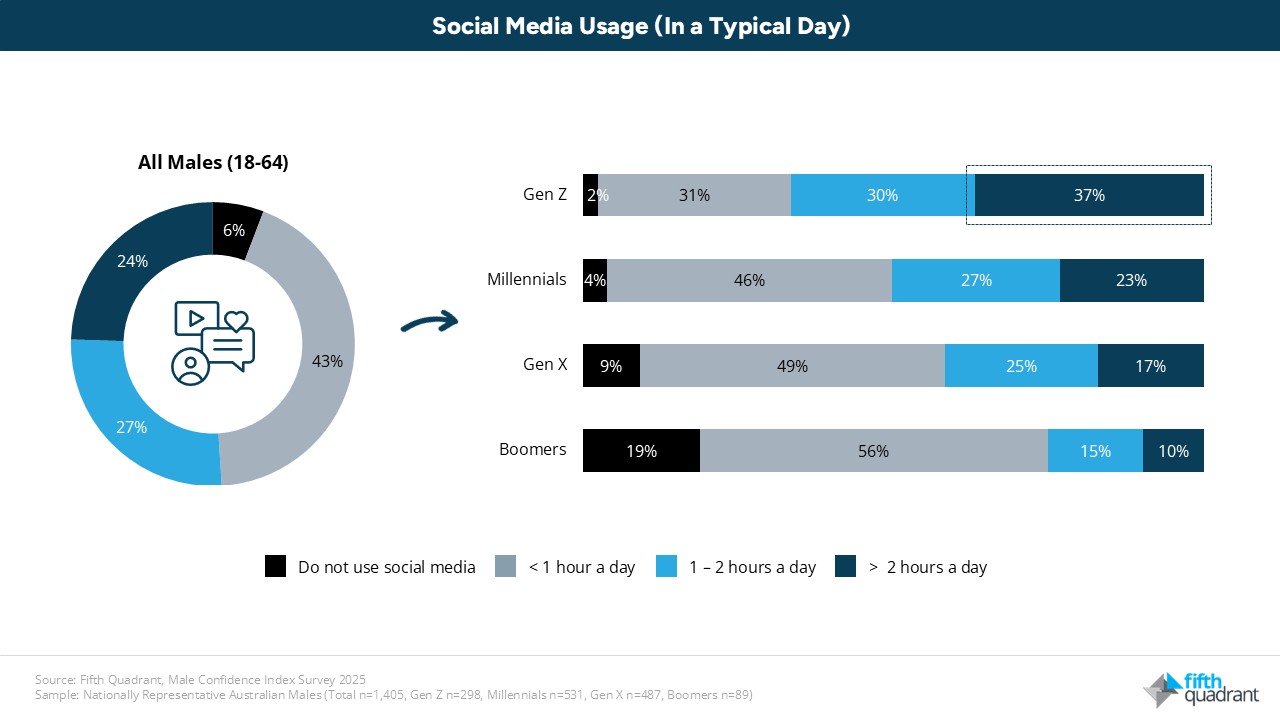
Social media provides instant validation but creates dependence on external feedback. Heavy users score lower on recovering from setbacks and asking for help, two critical resilience components. The irony: over three-quarters of Gen Z men acknowledge male influencers promote unrealistic expectations.
Financial stress across all ages
Finance & Career emerges as the weakest domain at just 55 out of 100. With housing affordability at historic lows and cost-of-living pressures mounting, this struggle is unsurprising but concerning. Notably, women rate male confidence in this area higher than men rate themselves, suggesting provider norms create pressure to project financial control even when feeling uncertain.
What this all means
Australia’s inaugural Male Confidence Index sits at 63 out of 100. Most men are managing, not thriving. But the index isn’t just about the number. It’s about understanding that confidence isn’t fixed. It changes across life stages, shaped by systems, relationships, and environments we create.
The findings challenge us to stop assuming confidence grows automatically with age, pay attention to Gen X who are managing the most with the least margin, recognise that younger men’s confidence coexists with significant pressure, and understand that how men experience confidence often differs from how it appears to others.

This research isn’t prescriptive. We’re not here to define masculinity or tell men how to feel. We’re surfacing what’s actually happening, replacing assumptions with evidence and creating shared language for more constructive conversations.
The Male Confidence Index is a baseline that can be tracked over time to see how confidence evolves. For now, the value is in seeing the current reality clearly. And the reality is more nuanced, more interesting, and more hopeful than the headlines alone suggest.
At Fifth Quadrant, we bring deep expertise in social research and consumer insights. Our work on the Male Confidence Index for Man of Many represents our commitment to evidence-based understanding of complex social issues. Explore our latest research insights or get in touch to discuss how research can inform your strategic decisions.
Posted in Consumer & Retail, CX, Healthcare, TL, Uncategorized