

Fuel cost pressure has changed how Australians drive
Author: James Organ | Posted On: 14 Jul 2026
How are Australian fuel prices changing driving habits and future vehicle choices?
After a period of elevated fuel prices and supply concerns, Australians have adapted how they use their cars, which trips they prioritise and what vehicles they are willing to consider next.
The latest Fifth Quadrant Consumer Tracker shows that 31% of Australians say they used their car less over the past 12 months, up from 25% in both 2024 and 2025.
This is an important behavioural signal. Fuel cost pressure has not only affected how consumers think about household budgets, it has also changed everyday mobility decisions. For many households, driving is no longer treated as a fixed behaviour. It is being managed more carefully, particularly when trips can be delayed, combined or avoided.
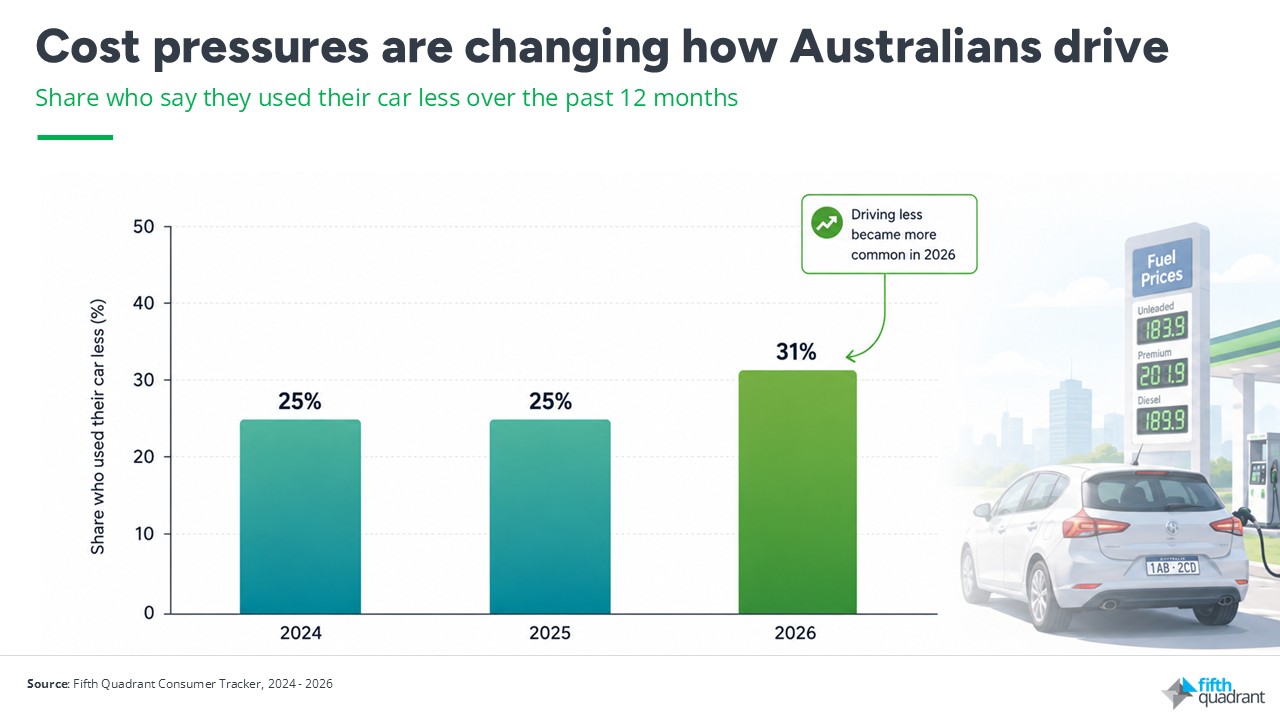
How Fuel Cost Pressure Is Changing Australian Driving Habits
The demographic cuts show this behaviour is not evenly distributed. Baby Boomers are the most likely to say they have used their car less, at 42%, followed by households earning under $50,000 at 37% and women at 35%. This suggests the response to fuel cost pressure is shaped by both cost sensitivity and life-stage factors.
Older Australians may have more flexibility to reduce discretionary trips, while lower-income households are more exposed to fuel and transport costs. For women, the higher level may reflect the way household trip management, shopping and family logistics have been adjusted in response to higher costs.
The clearest adjustment has been to discretionary travel. In 2026, 56% of Australians say they have cut back on leisure or non-essential trips because of fuel prices or supply concerns.
More concerningly, the behaviour is also spilling into routine travel, with 49% reducing essential driving such as commuting, school drop-offs or shopping trips.
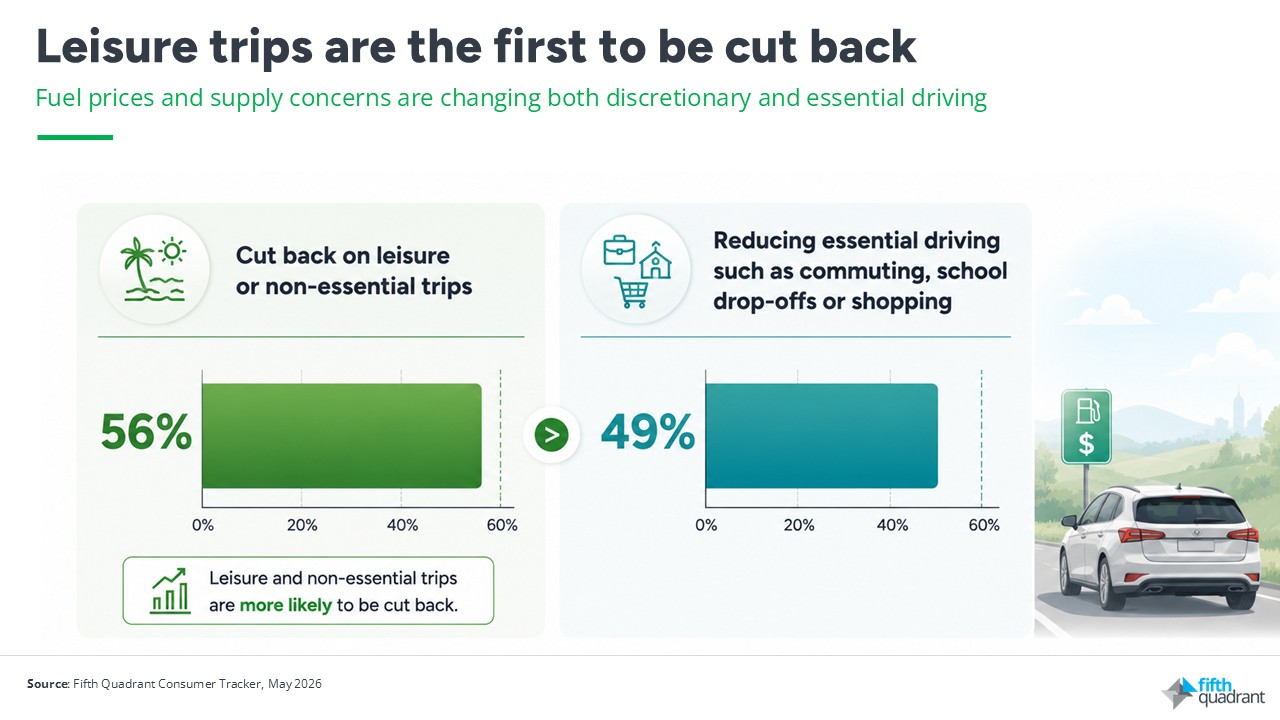
This shows that the response to fuel cost pressure has not been limited to optional journeys. For many households, fuel costs have become part of the weekly decision-making process, influencing which trips are necessary, which can be combined and which can be avoided altogether.
Fuel Costs Are Reshaping Vehicle Ownership
The impact is also flowing through to how Australians manage vehicle ownership.
In 2026, 19% say they delayed or put off non-essential servicing, up from 15% in 2025, while 13% delayed replacing wear parts until absolutely necessary. This suggests cost pressure is affecting not only trip decisions, but also how households manage ongoing vehicle maintenance.
For automotive businesses, this creates a more complex cost-of-living challenge. Delayed servicing may provide short-term household savings, but it can increase the risk of more expensive repairs and reduce confidence in the affordability of vehicle ownership.
Rising Fuel Prices Are Increasing EV and Hybrid Consideration
The same pressure is also influencing future vehicle consideration. Almost half of Australians, 49%, say they are more likely to consider an electric or hybrid vehicle due to rising fuel prices and concerns about fuel availability.
This shift is also showing up in the new-vehicle market. VFACTS data shows battery electric vehicles reached a record 20% share of new-vehicle sales in May 2026, while electrified vehicles, including BEVs, hybrids and plug-in hybrids, accounted for 46.4% of all new-vehicle sales that month. The Tesla Model Y was also the best-selling vehicle in Australia in May, reinforcing that fuel cost pressure and ownership economics are translating into real market behaviour.
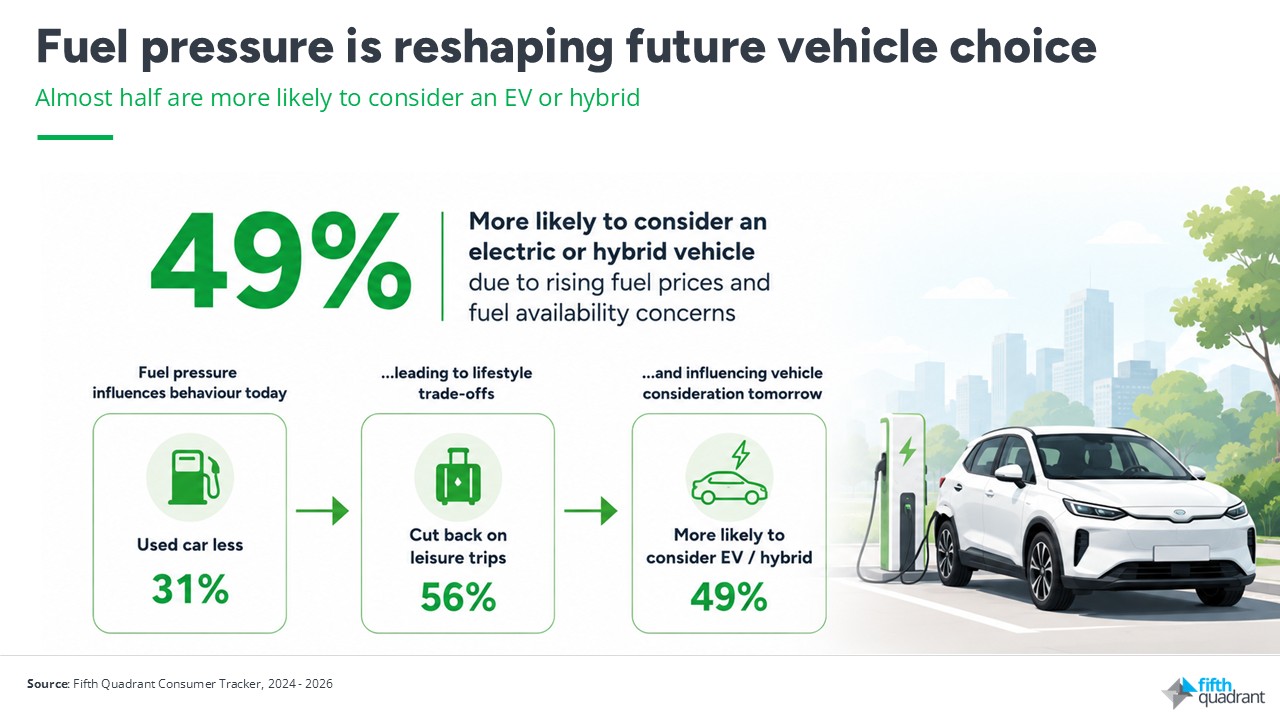
This does not mean EV or hybrid adoption will automatically continue at the same pace. Consideration still depends on purchase price, charging access, battery confidence, range, resale value and total cost of ownership. But the data shows fuel cost pressure has created a stronger reason for consumers to reassess what they drive next.
For dealers, OEMs and service providers, fuel efficiency, total cost of ownership, servicing transparency and practical ownership support need to be central to the customer conversation. EVs and hybrids should not only be positioned around technology or environmental benefit. They also need to be framed around everyday cost control, confidence and suitability for real driving patterns.
Fuel cost pressure has changed how Australians drive today, and it is influencing what they may consider tomorrow. The car remains central to mobility, but consumers are using it more selectively and evaluating future vehicles through a more practical cost-of-ownership lens.
Understanding how Australians are responding to changing fuel costs is essential for dealers, OEMs, automotive suppliers and service providers making decisions about products, pricing and customer strategy. Fifth Quadrant’s automotive market research helps organisations track evolving consumer behaviour, vehicle purchase intentions and ownership trends, providing the insights needed to make confident, evidence-based decisions in a rapidly changing market. Contact us to learn how our automotive research can support your business.
Research sources: Fifth Quadrant Consumer Tracker (2026); Fifth Quadrant, Australian Consumer Confidence in 2026; Federal Chamber of Automotive Industries (FCAI), VFACTS May 2026 New Vehicle Sales Report, including electrified vehicle sales data; FCAI, March 2026 VFACTS Report; FCAI, April 2026 VFACTS Report; and the Australian Competition and Consumer Commission (ACCC), Weekly Fuel Price Monitoring Reports.
Posted in Auto & Mobility, B2B, Consumer & Retail, QN, Uncategorized